
The Real Estate Sales Process From Offer to Contract
At its most simple, the work of a real estate agentReal Estate License is to sell properties. But buying a home is not as easy as just walking into a home store and walking out with keys.
Real estate transactions involve a sales process with many steps, including receiving an offer, negotiations, and contracts. In this post, we go into detail about every step so you know exactly what to expect when you go through the process.
Before the Sale: Listing
Before any offer can be made on a property, it needs to be listed as for sale. Listing and preparing the house for visits (in person or virtual) are essential skills for real estate agents. You will have to take photosHow Get Great Listing Photos Blog, write a description, perhaps build a virtual visit using proptech.Top Proptech Tools And Companies Real Estate Professionals Blog Professional home stagingTop 7 Home Staging Mistakes Real Estate Agents Make And How Avoid Them Blog can also improve your chances of getting offers on the listing quickly.
A good listing ensures that the seller receives acceptable and motivated offers on their property.
Step 1: Offer
In truth, the real estate sales process begins with the listing, but let's skip ahead and look at the process beginning with the offer.
After visiting the home and considering their budget, potential buyers will make an offer on a property. This offer is typically delivered by the buyer's agent to the listing agent, and the listing agent passes on the offer to the seller. The listing agent's job is to help the seller make a decision as fast as possible without rushing them, as well as handle any negotiations.
If a listing has multiple offersBest Practices Listing Multiple Offers Blog, it is up to the listing agent to help the seller figure out the next steps.
Step 2: Responding to the Offer
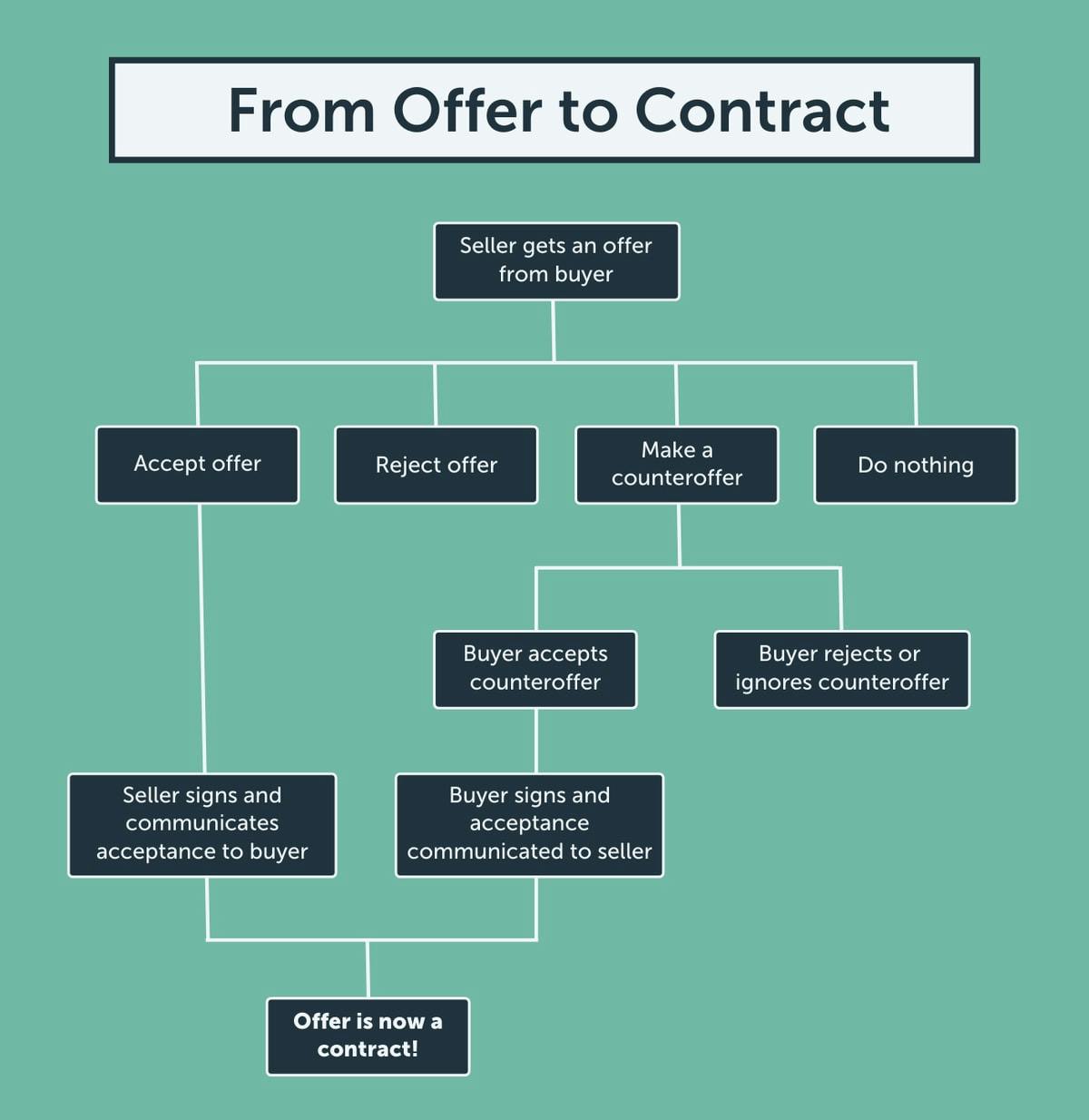
There are four possible responses to an offer. Two of them end the process: rejecting the offer and ignoring the offer. The difference is simply that a rejected offer will be communicated to the potential buyer; an ignored offer will not.
If the seller decides to consider the offer, they have two options: accepting the offer or making a counteroffer. Accepting the offer moves us directly to step four, so we'll skip it for now and focus on making a counteroffer. If the seller is interested in the offer but not quite happy with the price, they can make a counteroffer to the potential buyer. This counteroffer will be presented to the buyer by their agent.
Step 3: Managing the Counteroffer
Once the counteroffer is presented to the buyer, the buyer is now in the position to do two things: either accept the counteroffer or reject/ignore the counteroffer. The second option ends the process.
If the buyer decides the counteroffer is acceptable, they will let their agent know. Accepting the counteroffer moves the process to the next step.
Step 4: Accepting the Offer
At this step, the offer or the counteroffer is accepted. The concerned real estate agent communicates this to the other party's agent. Remember: the seller can accept the offer in step two, which leads us to step four. If a counteroffer is made and accepted, it's the buyer who has to accept and communicate to the other party.
Step 5: Offer Becomes Contract
Once the offer is accepted by either the seller or the buyer, it becomes a contract. The contract is an agreement between the two parties that the buyer will give money to the seller for the property.
After Closing
Finalizing a contract between two parties is called "closing". Although there are still things to do to finalize the purchase, reaching the step of a signed contract means that in all likelihood, the property will soon pass from the seller to the buyer. Real estate agents may want to consider closing giftsReal Estate Agents Closing Gift Guide Blog for their clients.
Need to Renew Your Real Estate License? Begin your Continuing Education Course today!

How to Prepare Your Home for Extreme Heat
With extreme heat becoming more frequent, how can you prepare your home for the hotter months? We'll show you what to watch out for and how to prepare for the heat this summer.

Real Estate Specialties You Should Know About
This article explains some of the most common residential and commercial real estate specialties so you can decide what to focus on in your career.

How Does Weather Impact Real Estate Sales?
Normal weather patterns and climate change-fueled extreme weather events all have different effects on real estate prices and sales.
Want to know more about being a real estate agent?
Ready to get going? Hit the ground running with everything you need to know to advance your career in real estate.